
VIP Guard
GismartArcade
4.72.63K Reviews
- Version
- 1.2.32
- Installs
- 10.00M
- Age Rating
- Teen
Screenshots
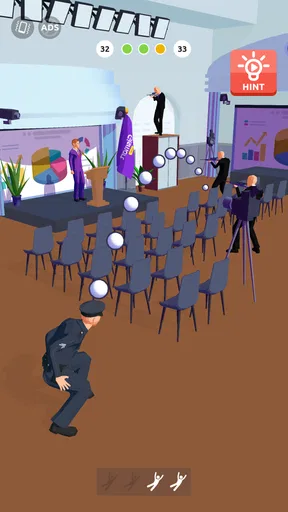
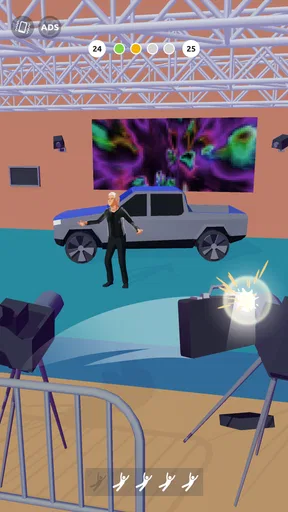
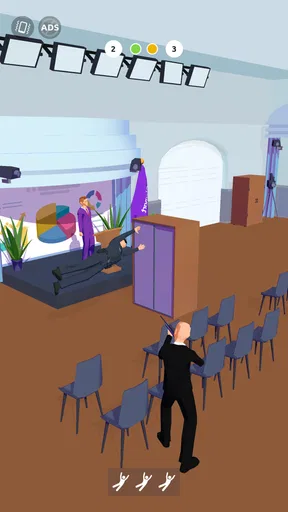
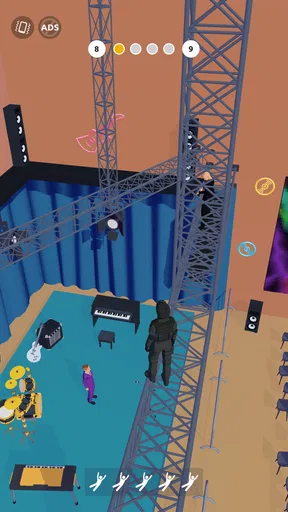
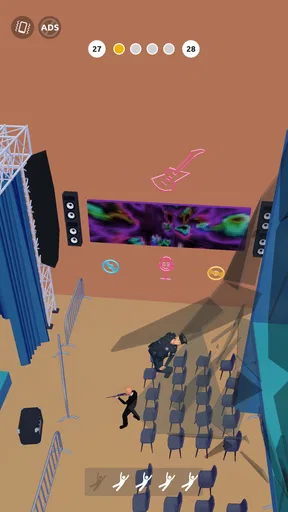
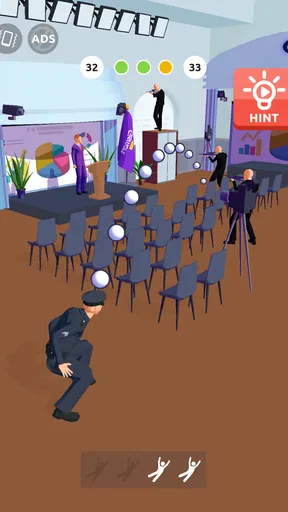
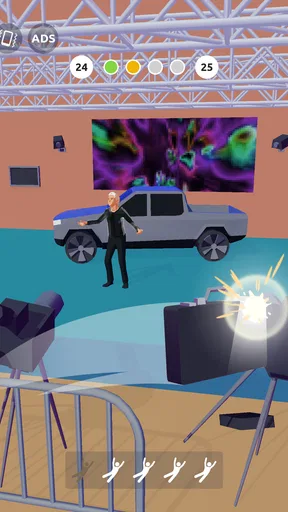
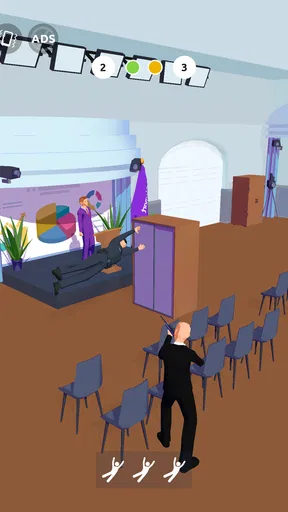
Our Review of VIP Guard
 Analysis by Appyee
VIP Guard is the kind of arcade game I reach for when I want a quick burst of action rather than a long campaign to manage. The idea is immediately clear: I stand between danger and a protected VIP, moving into the path of incoming bullets and trying to keep the important person alive. That simple setup gives each attempt an easy-to-understand objective, but the pressure comes from reacting correctly instead of merely tapping as fast as possible.
After spending time with it, I see why this game has attracted a large audience. It is free to start, easy to understand within moments, and built around short sessions that fit naturally into a break, a commute, or a few minutes before bed. At the same time, its simplicity can become a limitation if I want deep progression, a wide range of strategies, or the kind of long-term variety found in larger arcade games.
How the basic protection loop feels in practice
The first thing I like about VIP Guard is that it does not make me learn a complicated control scheme before the action begins. The central task is to protect the VIP, and my attention quickly settles on positioning, timing, and recognizing where the next threat is likely to come from. That makes the opening experience friendly even for someone who rarely plays mobile games.
My usual workflow is simple. I begin a stage, watch the danger develop, and move my character so the bullet reaches me instead of the person I am guarding. The challenge is not just reacting to a single projectile. I also need to avoid drifting into a poor position after dealing with the previous threat. A successful move should leave me ready for what follows, not merely solve the immediate problem.
That is where the game becomes more interesting than its short store summary suggests. The human-shield premise creates a useful trade-off: staying close enough to protect the VIP can reduce my room to maneuver, while moving too far away may leave the target exposed. I found that careless movement often caused more trouble than slow movement. When I tried to rush every decision, I sometimes placed myself in a worse line for the next shot.
The game works especially well in short, repeatable sessions. I can play one attempt while waiting for an appointment, then put it down without feeling that I have abandoned a complicated story or an ongoing team. If I fail, the reason is usually understandable enough to make another attempt feel worthwhile. That quick restart rhythm is a strong match for the arcade category.
It is also a good choice for players who enjoy games built around immediate physical objectives. There is no need to memorize a large map or study a long tutorial before the main idea makes sense. The appeal comes from the tension of being the barrier between the projectile and the VIP, then trying to make the next attempt cleaner than the last.
The habit that makes early attempts less chaotic
I recommend treating the first few attempts as observation runs rather than trying to win through frantic reactions. I watch the direction of danger, notice how much space I have, and pay attention to where my character ends up after each move. This approach gives me a repeatable starting habit: identify the safest interception position first, then move only as much as necessary.
That small change matters because the game rewards controlled decisions more than random activity. If I constantly sweep around the screen, I may feel active, but I am not necessarily protecting the VIP efficiently. A calmer rhythm helps me keep a clear view of the relationship between my position, the target, and the incoming bullet.
For younger players, families should remember that the content rating is Teen. The premise is cartoon-like arcade danger, but it still revolves around shooting and protecting a person from bullets. I would not choose it automatically for a very young child simply because the controls are easy. For older players who are comfortable with light action themes, the rating should be much less of a concern.
Where the game fits among other arcade choices
Compared with endless runners, VIP Guard asks for more deliberate positioning and less constant forward movement. I am not mainly trying to collect items while a character runs through an expanding course. Compared with puzzle arcade games, the decisions here are more immediate and spatial, with less time to stop and calculate. Compared with larger action games, it is far lighter on story, equipment, and long-term systems.
That comparison explains who will enjoy it. If I want a focused reflex challenge that I can understand quickly, this is more convenient than opening a large action title. If I want a substantial campaign, character development, or a deep competitive system, a different arcade or action game will likely hold my attention longer.
Settings, pacing, and practical play habits
I find settings and pacing matter here less as a route to customization and more as a way to make each attempt comfortable. Before settling in, I check that the controls feel manageable on my device and choose a session length that leaves room to pay attention rather than rush. That practical approach also helps clarify what the game’s streamlined presentation does—and does not—make easy.
What I check before settling into a session
VIP Guard is not the sort of game where I need to spend a long time tuning dozens of options. I still make a habit of checking the available controls and presentation settings before judging the experience. On a phone, small differences in touch response, screen comfort, and sound level can affect how confidently I react, particularly when a stage becomes busy.
I prefer to play with a clear view of the action and enough battery for several attempts. That sounds obvious, but this game depends on seeing the threat and responding without hesitation. Notifications, a crowded screen, or an uncomfortable grip can turn a fair mistake into an avoidable failure. I also keep the volume at a level where the game does not become tiring during repeated attempts.
The current version is 1.2.32, and the game supports devices running at least Android 7.1. That makes it accessible to people using older compatible Android phones, although practical comfort still depends on the individual device. A phone that technically runs a game is not always the phone on which quick movement feels pleasant. I would test a short session before deciding whether it deserves a permanent place on my home screen.
Because the game is free, I can evaluate the core loop without paying first. That is useful when I am unsure whether its repeated protection challenges will suit me. There are in-app purchases priced from $3.49 to $4.99 per item, so I would look at the purchase prompts carefully and decide in advance whether I want to spend anything. The free entry is a genuine advantage, but it does not change the fact that optional spending can become part of the experience.
How I keep the screen and my attention under control
My most useful practical adjustment is not a secret setting; it is reducing distractions around the game. I play in short blocks and stop when my reactions become rushed. Since the central challenge depends on timing and placement, continuing while tired often produces a string of mistakes that teaches me very little.
I also avoid changing my movement style after every failure. If I make one error, I first ask whether the problem was my starting position, a late reaction, or unnecessary movement. Then I change one thing on the next attempt. This turns retries into experiments instead of a series of emotional guesses. It is a particularly helpful habit in a game with a compact rule set, because small improvements are easier to notice.
For a realistic everyday scenario, imagine having five minutes before a train arrives. I can complete a few attempts, learn the pattern of a difficult situation, and close the game without needing to remember a complicated quest. If I have only a few seconds, however, I would not start a serious attempt; the game is quick to open, but the protection task still deserves enough attention to make the session satisfying.
Small movement patterns that make attempts cleaner
Experienced play, in my view, comes from making fewer unnecessary corrections. When I see a bullet approaching, I try to move into a useful intercepting position rather than circling around the VIP. After the immediate danger passes, I pause briefly to reassess instead of assuming that the previous position remains safe.
Another helpful pattern is to keep a mental distinction between emergency movement and preparation. Emergency movement is the action required to block the current threat. Preparation is choosing where I want to finish so that the next decision is easier. Mixing those two ideas made my early attempts messy. Separating them gave me more control without requiring any advanced feature or complicated trick.
I also recommend resisting the urge to chase visual activity. A moving character can feel safer, but movement has value only when it improves the protection line. In some situations, a modest adjustment is better than a dramatic dash. This is one of the game’s more subtle trade-offs: the fastest-looking response is not always the most effective one.
When repetition stops being useful
There is a point where repeating the same attempt without reflection becomes unproductive. If I fail in the same place several times, I stop and identify the exact moment the plan breaks down. Perhaps I entered the danger zone too early, reacted to the wrong threat, or left myself with no room for the next move. Naming the problem gives the next attempt a purpose.
This method is more satisfying than blaming the controls immediately, although controls can still be a factor. Touch-based movement is naturally less precise than a physical controller, and players who prefer exact inputs may find that frustrating. I would recommend a different arcade game with more forgiving controls or controller support if precision is the main reason I play.
Where the simple design reaches its limits
The same focus that makes VIP Guard quick to understand can leave some players with too few ways to adapt the experience to their needs. I look at those limits in terms of touch precision, visual attention, and the kinds of situations where a short, reaction-based game is harder to enjoy. From there, it is easier to judge whether the design’s simplicity is a welcome convenience or a real barrier.
Who should skip it
I would skip VIP Guard if I am looking for a rich narrative, extensive character customization, or a large collection of distinct gameplay systems. Its strength is focus, and focus means there is less room for the kind of variety found in a full-scale action game. The human-shield concept is memorable, but it cannot carry every type of player indefinitely.
I would also hesitate if I dislike repeating short challenges. The game’s appeal depends on trying again, adjusting my timing, and gradually becoming more consistent. Someone who wants every stage to introduce a completely new mechanic may find the structure too narrow. Likewise, players who want a relaxed experience with no pressure may not enjoy being responsible for an exposed VIP.
Another consideration is monetization. The game costs nothing to begin, which makes sampling easy, but the presence of purchases means I would be cautious with a child’s device or a shared family account. I would not let the free label alone decide whether it is suitable. The better question is whether the player can enjoy the core loop while treating optional spending as a deliberate choice rather than an automatic part of play.
What keeps it appealing despite those limits
Even with its narrow focus, the game has a clear identity. Many mobile arcade titles blur together because they use familiar running, matching, or tapping structures. VIP Guard gives me a specific role: I am not simply surviving for my own score, but actively placing myself between danger and another character. That creates a different kind of pressure and makes each mistake feel connected to the objective.
The game is also approachable without being completely mindless. I can understand the goal instantly, yet still improve my results by refining movement and timing. That combination is valuable for casual players who want a challenge that does not demand a large time investment. It is less suitable for players who measure depth by the number of systems available, but it works well for those who measure depth by how much control a simple rule can offer.
Gismart has positioned it as an arcade game rather than an elaborate action production, and that distinction sets the right expectation. I do not open it expecting a cinematic experience. I open it expecting a compact test of awareness, then decide whether I am in the mood to repeat it. When I approach it that way, the limited scope feels intentional rather than disappointing.
Questions I would ask before downloading
Is it genuinely free to try? Yes, I can start without paying. I would still review any purchase prompts because individual in-app items range from $3.49 to $4.99. That makes it easy to sample, but I would keep spending separate from my judgment of whether the gameplay itself is enjoyable.
Can it work on an older Android phone? It supports Android 7.1 and later, so people with older compatible devices have a reasonable chance of installing it. I would still judge the experience by touch responsiveness and screen comfort rather than compatibility alone.
Is it suitable for a quick break? Very much so. The basic objective is immediate, and I do not need to maintain a long narrative thread between sessions. The best short sessions are the ones where I focus on one improvement, such as cleaner positioning or better preparation after an interception.
Will it replace a larger arcade game? For me, no. It complements those games rather than replacing them. I choose it when I want a compact reaction challenge, while I choose a more substantial alternative when I want exploration, progression, or a broader set of mechanics.
Does a high player response guarantee that I will enjoy it? Not necessarily, although its average rating of 4.7 and more than 253 thousand ratings show that the basic concept has connected with many players. I treat that as encouragement to try it, not as proof that its focused, repetitive structure will match my personal taste.
My verdict after building a repeatable routine
VIP Guard is at its best when I use a simple routine: check the controls, begin with observation, move only with a reason, and review the exact cause of each failure. That routine turns a very accessible arcade premise into a more thoughtful challenge. I do not need hidden shortcuts or complicated settings to improve; I need better awareness of position, timing, and what my last movement leaves available.
The game has reached over 10 million installs, which fits its broad accessibility. It is free, easy to understand, and available from developer Gismart for players who want a quick mobile action experience. Its Teen content rating, shooting theme, and optional purchases are worth considering before installing, especially on a shared device.
My final recommendation is positive, with clear boundaries. I would suggest it to a friend who enjoys short arcade sessions, quick retries, and the unusual challenge of protecting a VIP through careful movement. I would not suggest it to someone seeking a deep campaign, extensive customization, or a completely calm game. For the right player, the strongest part of VIP Guard is the tension created by one simple responsibility: every movement must protect someone else.
That focus gives the game its charm and also defines its ceiling. I can return to it whenever I want a fast test of reactions and positioning, but I should not expect it to become a full replacement for broader arcade or action games. With realistic expectations and a disciplined play habit, VIP Guard is a polished-feeling pick for quick sessions where a small decision can make the difference between saving the VIP and starting again.
Verdict
Strengths of VIP Guard
- Helps organize VIP contacts and important numbers in one place.
- Quick access to emergency contacts can save time in stressful situations.
- Simple interface makes core features easy to find and use.
- Useful for users who want an extra layer of personal safety planning.
- Can encourage better preparation for emergencies and urgent situations.
Limitations of VIP Guard
- Its usefulness depends on keeping contact details accurate and updated.
- Some features may require permissions that privacy-conscious users may dislike.
- It should not replace professional emergency services or a personal safety plan.
- Limited value for users who rarely need VIP or emergency contact tools.
- Performance and availability may vary depending on the device and app version.
Other Releases by Gismart
View All
Piano - Music Keyboard & Tiles
Music4.1

Real Guitar - Music Band Game
Music3.1

Drum Pads - Beat Maker Go
Music & Audio3.0

Piano - Play & Learn Music
Music4.2
Similar Picks in This Category
View All
Subway Surfers
SYBO Games4.6

Stickman Party 234 MiniGames
PlayMax Game Studio4.6

Subway Princess Runner
Ivy4.4

Temple Run
Imangi Studios4.2

Zombie Tsunami
Mobigame SAS4.6

Stack Ball - Crash Platforms
CASUAL AZUR GAMES4.5
Frequently Asked Questions
What is VIP Guard and what does it do?
VIP Guard is a security and privacy-focused application designed to help users monitor and protect activity on their mobile devices. Depending on the version and platform, its tools may include protection against suspicious behavior, privacy monitoring, alerts, or access-control features. Before downloading, check the official store description carefully, since available functions can differ between Android and iOS versions and may also vary by region.
Is VIP Guard free to download and use?
VIP Guard may be available as a free download, but some features could require a subscription, one-time purchase, or in-app payment. During testing, users should pay attention to the onboarding screens and the app’s store listing for details about trials, renewal terms, and limitations in the free version. Always review billing information before activating premium protection, particularly if automatic renewal is enabled.
Does VIP Guard require special permissions or access to personal data?
Security applications often need permissions to provide their main functions, such as notifications, device activity access, storage access, or permission to run in the background. VIP Guard should only be granted permissions that are clearly connected to the feature you want to use. Before installation, review its privacy policy and the permissions shown by your device, and avoid enabling access that seems unnecessary for the app’s stated purpose.
Can VIP Guard completely protect my phone from malware, scams, or unauthorized access?
No security app can guarantee complete protection against every threat. VIP Guard may provide useful monitoring, warnings, or privacy tools, but it should be used alongside system updates, strong passwords, two-factor authentication, and careful downloading habits. Avoid opening suspicious links or installing applications from unknown sources. The app should be considered an additional layer of protection rather than a replacement for basic mobile security practices.
Is VIP Guard compatible with my Android or iPhone?
Compatibility depends on the specific VIP Guard release, operating-system version, device model, and sometimes the user’s country. Before downloading, check the official Google Play Store or Apple App Store listing for supported requirements, developer information, recent update history, and user reviews. If the application requests unusual configuration changes or does not appear in your region, confirm that you are using the legitimate official version.
Play our best games!


